

Nuclear Waste Management - Core
LDRS technology enables non-destructive inspection of sealed, heavily shielded waste containers to support regulatory compliance and enable long-term storage without costly repackaging.

The problem is uncertainty inside sealed, shielded, and often poorly documented containers.
Historical records may be incomplete, inconsistent, or insufficient for final characterization decisions.
Containers may include heterogeneous material combinations that are difficult to assess from the outside.
Dense shielding can limit conventional inspection and reduce confidence in hidden-content assessment.
Opening, sorting, or repackaging can increase waste volume, exposure risk, cost, and operational complexity.
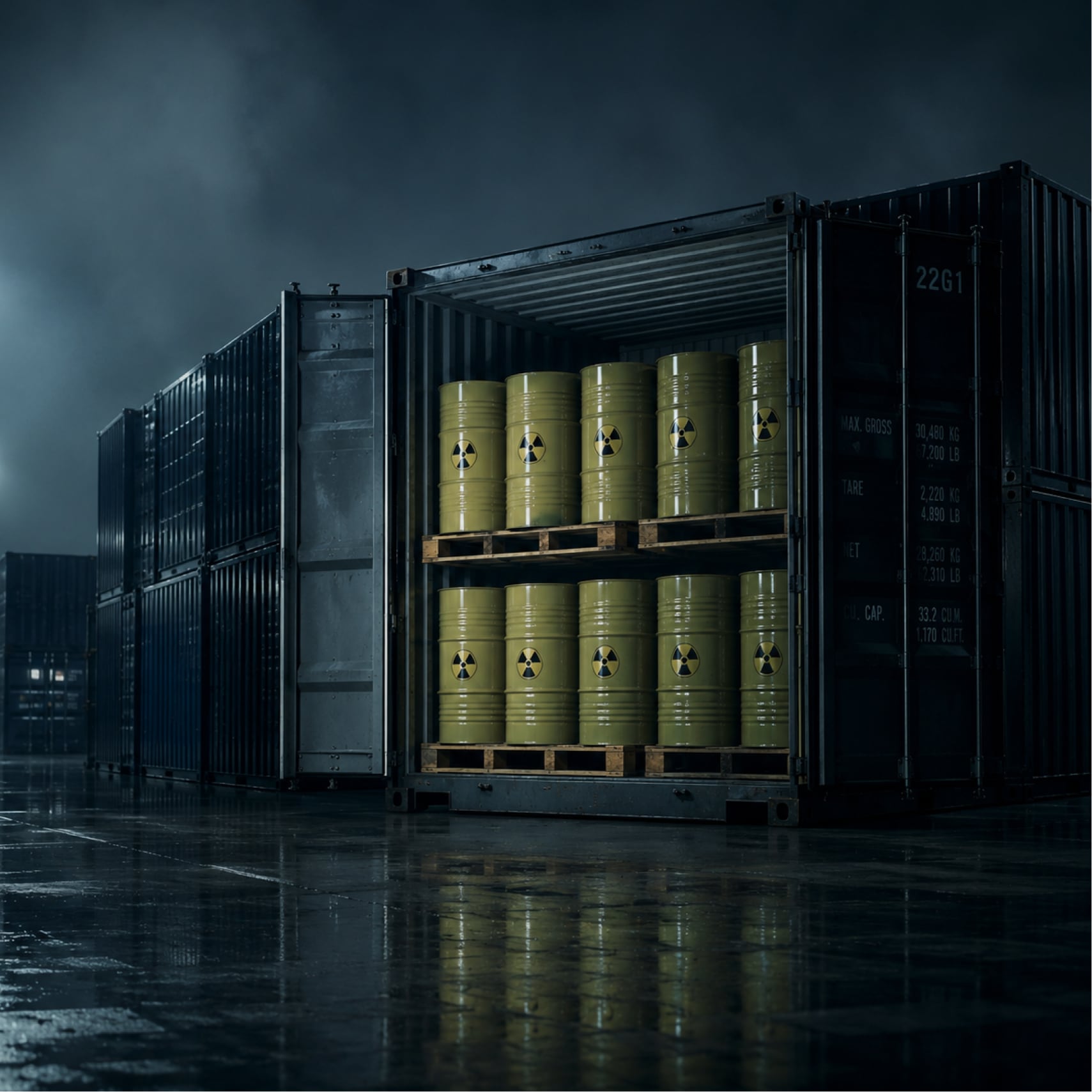
CORE translates the shared dual-radiation platform into a waste-specific evidence workflow.
Structural View
Maps internal geometry, dense structures, voids, and shielding-relevant features inside sealed waste containers.
Material Evidence
Adds composition-relevant signatures for hidden contents, especially where light elements or mixed materials matter.
Fused Waste Profile
Combines structural and material evidence into a use-case-specific dataset for waste characterization.
Characterization Report
Supports documented decisions on classification, handling, repackaging need, and further investigation.
The customer output is a defensible evidence package for waste characterization.
By combining MeV X-ray imaging and fast neutron analysis, LDRS technology provides visibility into sealed and heavily shielded waste containers, enabling non-destructive verification where conventional approaches are costly, complex, or impractical.
The process
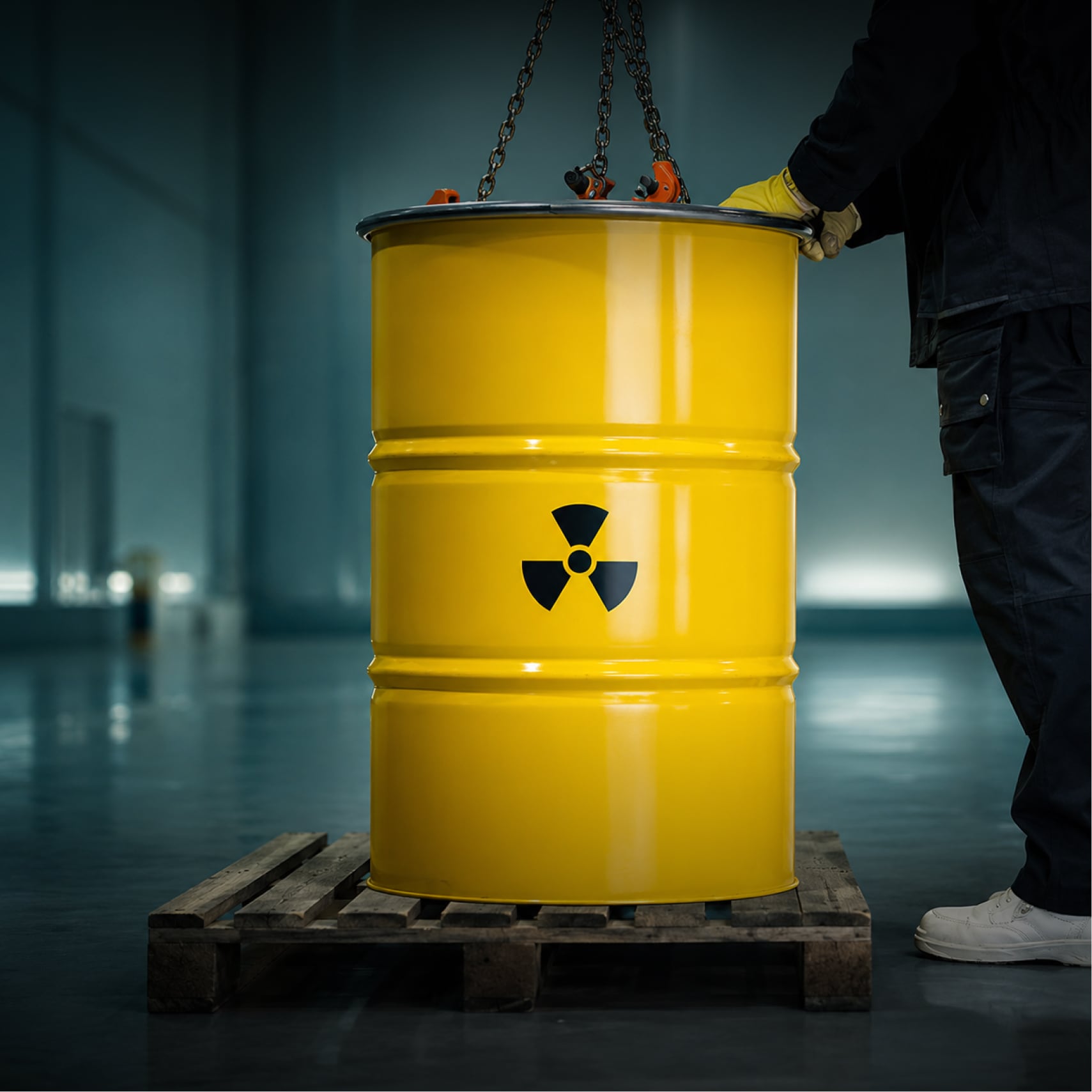
LDRS technology enables a fundamental shift in nuclear waste management by providing critical inspection data without opening or repackaging containers.
Support compliance assessments through improved container characterization.
Reduce repackaging requirements and associated disposal costs.
Minimize worker exposure associated with destructive inspection methods.
Enable better-informed decisions for storage and disposal planning.
MISSION-CRITICAL INSPECTION
By combining MeV X-ray imaging and fast neutron analysis, LDRS technology provides visibility into sealed and heavily shielded waste containers, enabling non-destructive verification where conventional approaches are costly, complex, or impractical.
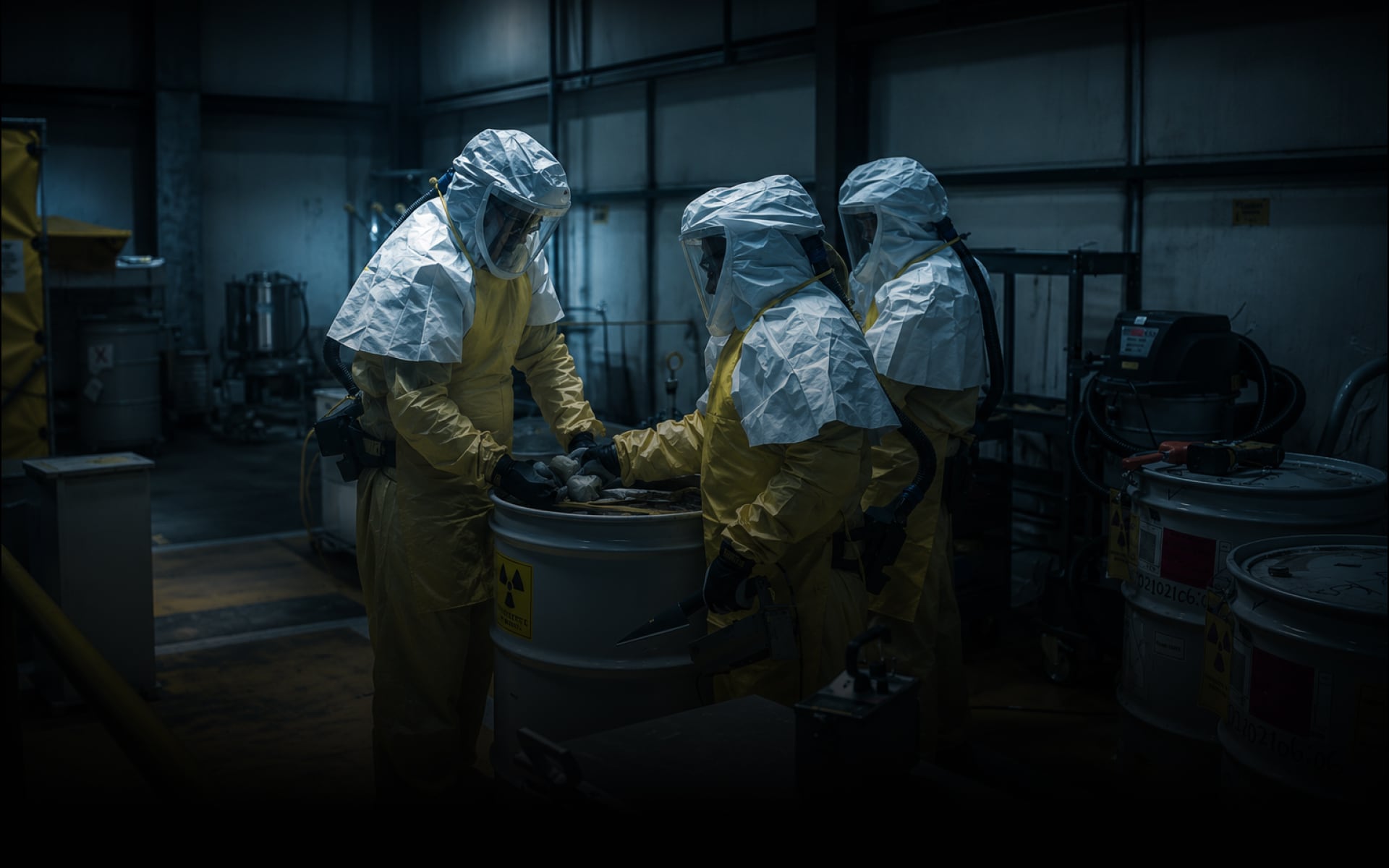

By combining MeV X-ray imaging and fast neutron analysis, LDRS technology provides visibility into sealed and heavily shielded waste containers, enabling non-destructive verification where conventional approaches are costly, complex, or impractical.
Contact Us →